What is EPP Raw Material? Properties, Uses and Benefits
Expanded Polypropylene raw material has become an important part of modern engineering and packaging solutions because it offers repeatable impact performance, low weight and long service life under demanding operating conditions. Used across industries such as automotive, drone, defence and logistics, EPP is valued for its ability to perform reliably under continuous stress while remaining lightweight. Understanding what EPP raw material is made of, how it is produced and where it is used helps clarify why demand for it continues to grow.
Table of Contents
What is EPP made of?
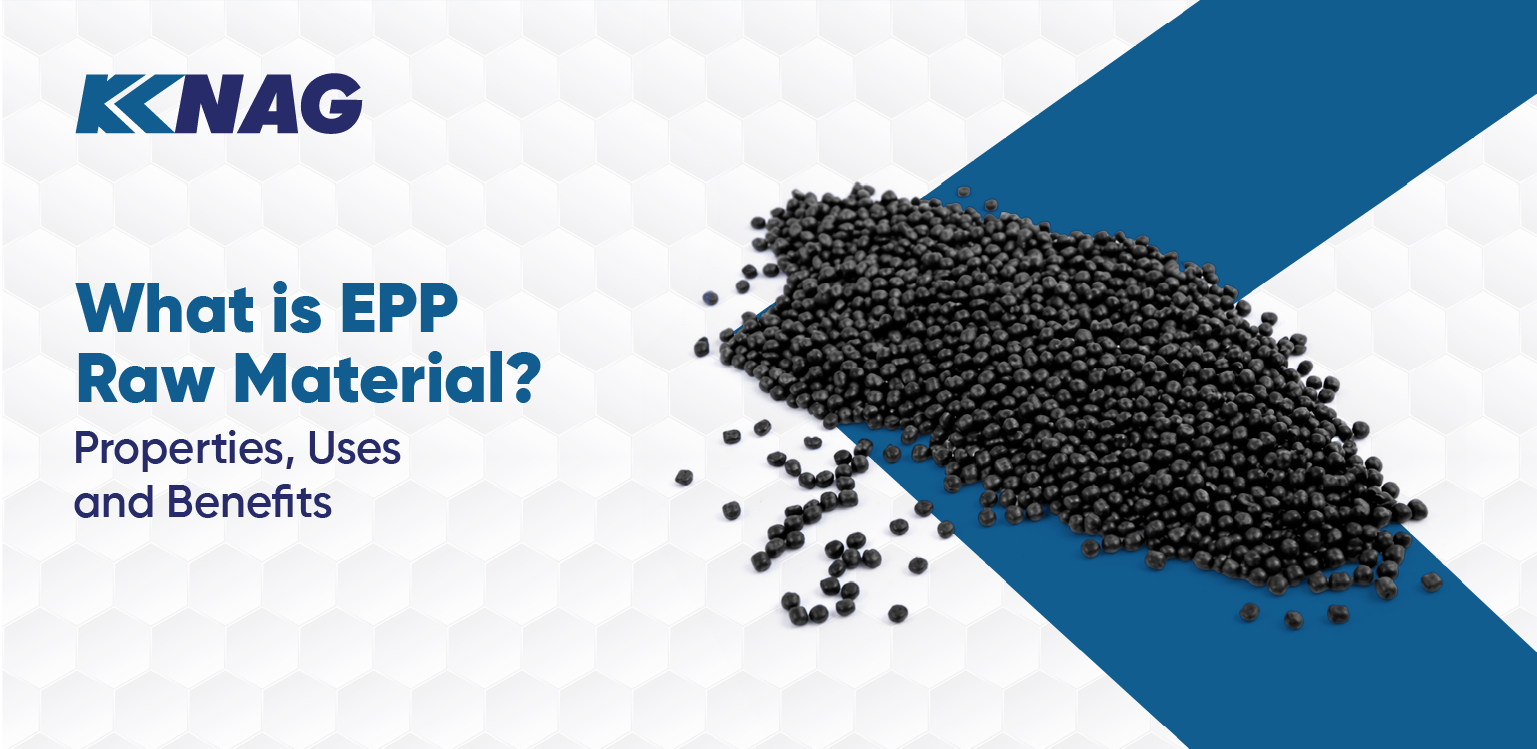
EPP raw material is derived from polypropylene, a thermoplastic polymer known for its toughness and resistance to fatigue. During production, polypropylene is transformed into small foam beads through a controlled expansion process. These beads are moulded into finished components using heat and pressure.
The structure of EPP beads is closed-cell, which means each bead contains tiny air pockets trapped within polymer walls. This structure is responsible for EPP’s distinctive combination of light weight and impact resistance. Foaming agent is used during the expansion stage to create this cellular structure, allowing the beads to expand uniformly without compromising material strength.
Depending on the application, EPP raw material can be produced in different colour grades, densities and bead sizes. These variations allow manufacturers to tailor performance characteristics such as stiffness, cushioning and surface finish to specific requirements.
Key properties of EPP raw material
Several properties make EPP raw material suitable for demanding applications.
One of its most important characteristics is energy absorption. EPP can absorb repeated impacts and recover its shape, which makes it useful in applications where shock resistance is critical.
Another key property is low weight. Components made from EPP raw material contribute minimal additional mass, which supports weight reduction goals in sectors such as automotive and material handling.
EPP is also resistant to moisture, several chemicals and temperature variation. This stability allows it to perform consistently in environments where exposure to humidity, vibration or fluctuating temperatures is common.
Durability is another defining feature. Unlike some foams that degrade after repeated use, EPP maintains structural integrity over long service cycles. This makes it suitable for reusable systems and long-term applications.
Manufacturing process overview
The manufacturing process for EPP raw material begins with polypropylene resin, which is extruded into mini pellets. These beads are impregnated with a foaming agent and then pre-expanded using steam or heat.
After expansion, the EPP beads are stabilised and aged to allow internal pressure to equalise. Once ready, they are placed into moulds where heat and pressure cause the beads to fuse. This step forms the final product without melting the polymer completely, preserving the bead structure.
The process allows for high levels of design flexibility. Complex shapes, varying wall thicknesses and integrated features can be achieved without secondary assembly. It also enables consistent replication once a design is approved.
Another benefit is design integration. EPP enables functional elements such as cushioning, spacing, insulation and surface definition to be combined into a single moulded component. This reduces part count, simplifies assembly and lowers the risk of performance variation caused by multi-material interfaces.
Uses and applications of EPP raw material
EPP is used across a wide range of industries due to its adaptable performance characteristics and visual versatility.
In the automotive sector, EPP is commonly used in interior safety components, seating structures and impact protection elements. Its ability to absorb energy while remaining lightweight supports both safety and efficiency requirements. In selected applications, EPP components are designed as visible parts rather than hidden supports.
In logistics, EPP is used to manufacture reusable transport packaging and protective inserts that support closed-loop movement of goods. The use of colour-coded components aids visual identification and sorting across supply chains, while the inherent resilience of EPP ensures protection is maintained through repeated handling and transport cycles.
Industrial applications include insulation components and protective housings. In these environments, durability and long-term dimensional stability are important because components often remain in service over extended operating cycles.
EPP is also used in consumer and recreational products such as child safety seats, sports protection gear, luggage components and reusable recreational equipment where comfort, resilience and long-term performance are important considerations.
Density and grades of EPP
EPP raw material is available in a range of densities, typically measured in kilograms per cubic metre. Lower-density grades provide greater cushioning and flexibility, while higher-density grades offer increased stiffness and load-bearing capability.
Different grades are selected based on application requirements. Lower-density EPP grades are typically used for cushioning elements such as protective packaging inserts, seating pads and impact buffers, while higher-density grades are selected for structural or semi-structural components, including automotive energy absorbers, industrial housings and load-bearing supports.
In addition to density variation, EPP grades are increasingly being produced with different proportions of recycled polypropylene content. These grades are developed to meet specific performance requirements while supporting recycled material targets across automotive, logistics and industrial applications. The recycled content level may vary by grade depending on strength, resilience and visual requirements, allowing manufacturers to balance performance with sustainability objectives.
EPP is available in multiple colour options such as black, white, light grey and pink. These colour grades allow components to function as visible A-surface elements where appearance, identification or contrast is important. The variations do not alter core mechanical performance.
Conclusion
Expanded polypropylene foam plays an important role in modern engineered solutions by delivering stable mechanical performance, lightweight construction and reliable behaviour under repeated operational loading. Its closed-cell bead structure, manufacturing flexibility and broad application range make it suitable for industries that require reliability across extended service life.
As industries continue to prioritise safety, efficiency and sustainability, the use of engineered solutions based on EPP is expected to remain relevant. Drawing on long-standing experience in engineered polymer applications, K. K. Nag brings application-led understanding to the development of EPP solutions that support real-world performance requirements across diverse sectors.
Featured Blogs
What is EPP Raw Material? Properties, Uses and Benefits
Expanded Polypropylene raw material has become an important part of modern engineering and packaging solutions because it offers repeatable impact performance, low weight and long service life under [...]
Global Market Trends in Rotomoulding in 2026: Key Drivers and Innovations
The global rotational moulding industry is entering 2026 on a steady growth path, driven by demand for durable, lightweight and material-efficient polymer components. As the automotive, agriculture, construction [...]
How Countries Abroad are Adopting EPP for Sustainable Growth in 2026
Sustainability is reshaping global manufacturing across industries as decision-makers strive to reduce emissions, cut waste and extend product lifecycles. Expanded polypropylene (EPP) continues to gain attention in transportation, [...]
What EV Manufacturers Need to Know About India’s PLI Scheme
India’s transition towards electric mobility is accelerating due to rising sustainability goals, localisation mandates and ongoing technological shifts in the automotive sector. The Production Linked Incentive (PLI) scheme [...]
Get in Touch with Us
We look forward to connecting with you!