What Is an Industrial Saddle? Types, Uses and Key Features
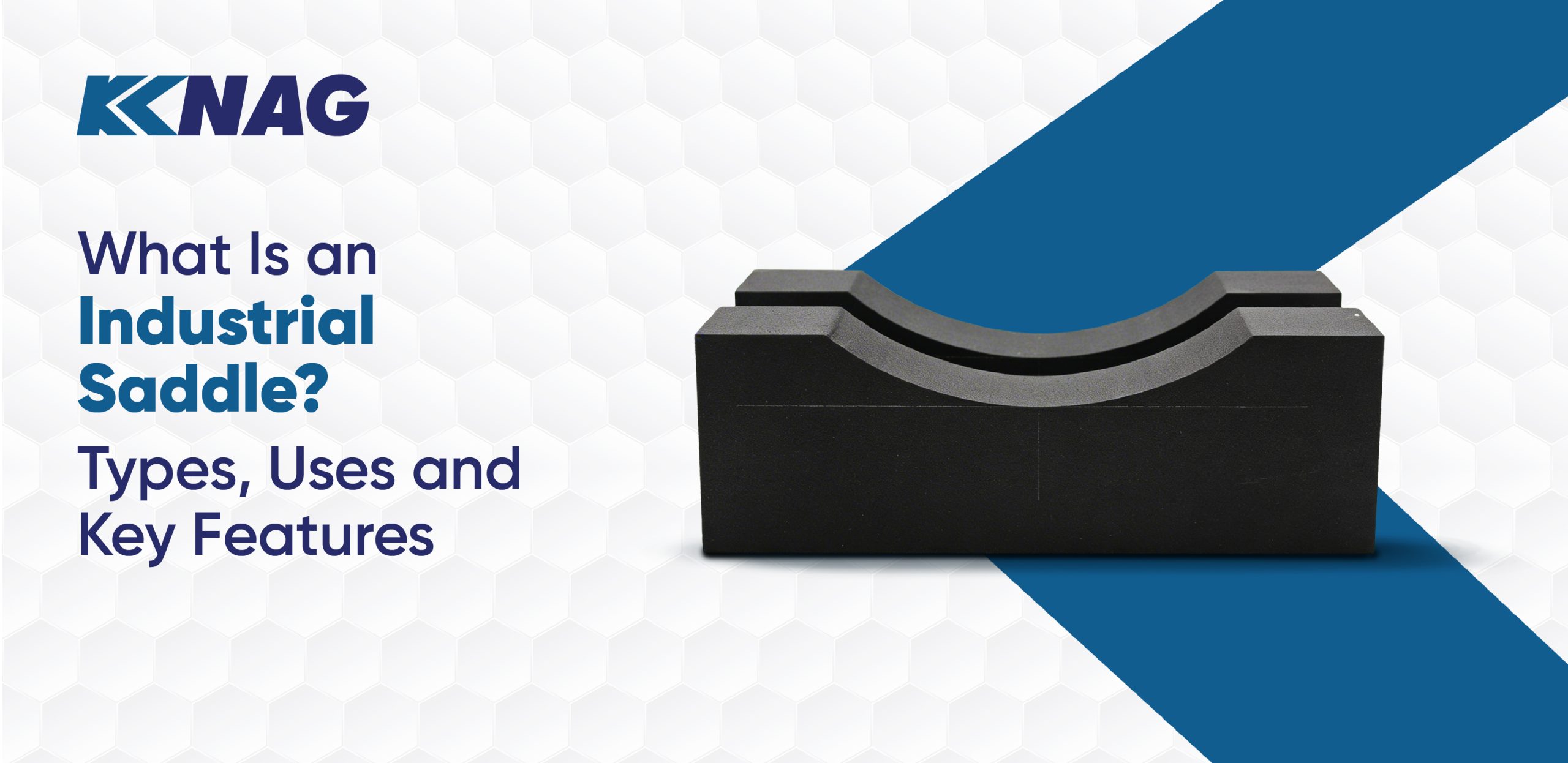
Industrial operations frequently involve handling, storing and transporting heavy cylindrical equipment such as pipes, pressure vessels, tanks and steel coils. These products are inherently unstable and prone to rolling, making safe support essential throughout their lifecycle. To address this challenge, industries use specialised industrial support structures known as industrial saddles.
Table of Contents
Industrial saddles are load-bearing components designed to cradle cylindrical objects securely while distributing weight evenly. By stabilising the product and preventing surface damage, they play a crucial role in safety, logistics efficiency and product protection.
Understanding industrial saddles
Industrial saddles are typically shaped to match the curvature of the object they support. Industry data from Future Market Insights and Verified Market Research indicates increasing adoption of engineered polymer solutions across sectors, including HVAC, civil engineering, automotive and industrial packaging, with JSP’s ARPRO expanded polypropylene also deployed in infrastructure and civil engineering applications.
The expanded polypropylene (EPP) market itself is estimated at approximately USD 1.1–1.2 billion in 2024 and is projected to reach around USD 1.8 billion by 2032, growing at a CAGR of about 6–7%. Within this, industrial handling, dunnage and protective packaging applications are expected to grow at a similar or slightly higher rate of around 7%, driven by safety requirements, weight reduction and lifecycle efficiency, as well as a shift away from wood and metal supports. This cradle-like geometry spreads the load across a wider contact area, reducing localised stress that could otherwise deform the product or damage protective coatings.
These saddles are used in both storage yards and during transit, serving as reliable saddles for both transportation and storage. They are also commonly deployed as separators when cylindrical items are stacked in multiple layers.
Applications include:
- Saddles for cylindrical products such as pipes, coils and tanks
- Saddles for pressure vessels during fabrication or shipment
- Support systems for heavy industrial equipment
- Temporary positioning aids during installation
Without proper saddling, heavy cylindrical items can shift, roll or collidewith adjacent components, creating safety hazards and increasing the risk of costly damage.
Types of industrial saddles
Industrial saddles are manufactured from various materials depending on load requirements, environment and intended use.
Wooden saddles
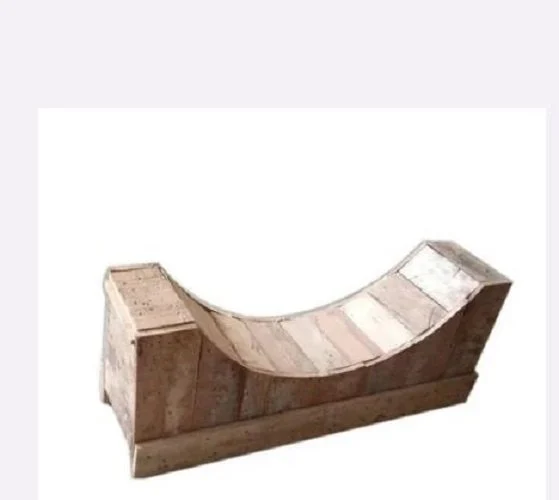
Timber saddles have traditionally been used due to their low upfront cost and ease of fabrication. However, they are often single-use, susceptible to moisture absorption, and may damage finished surfaces. Export shipments may also require treated wood, increasing complexity.
Metal saddles
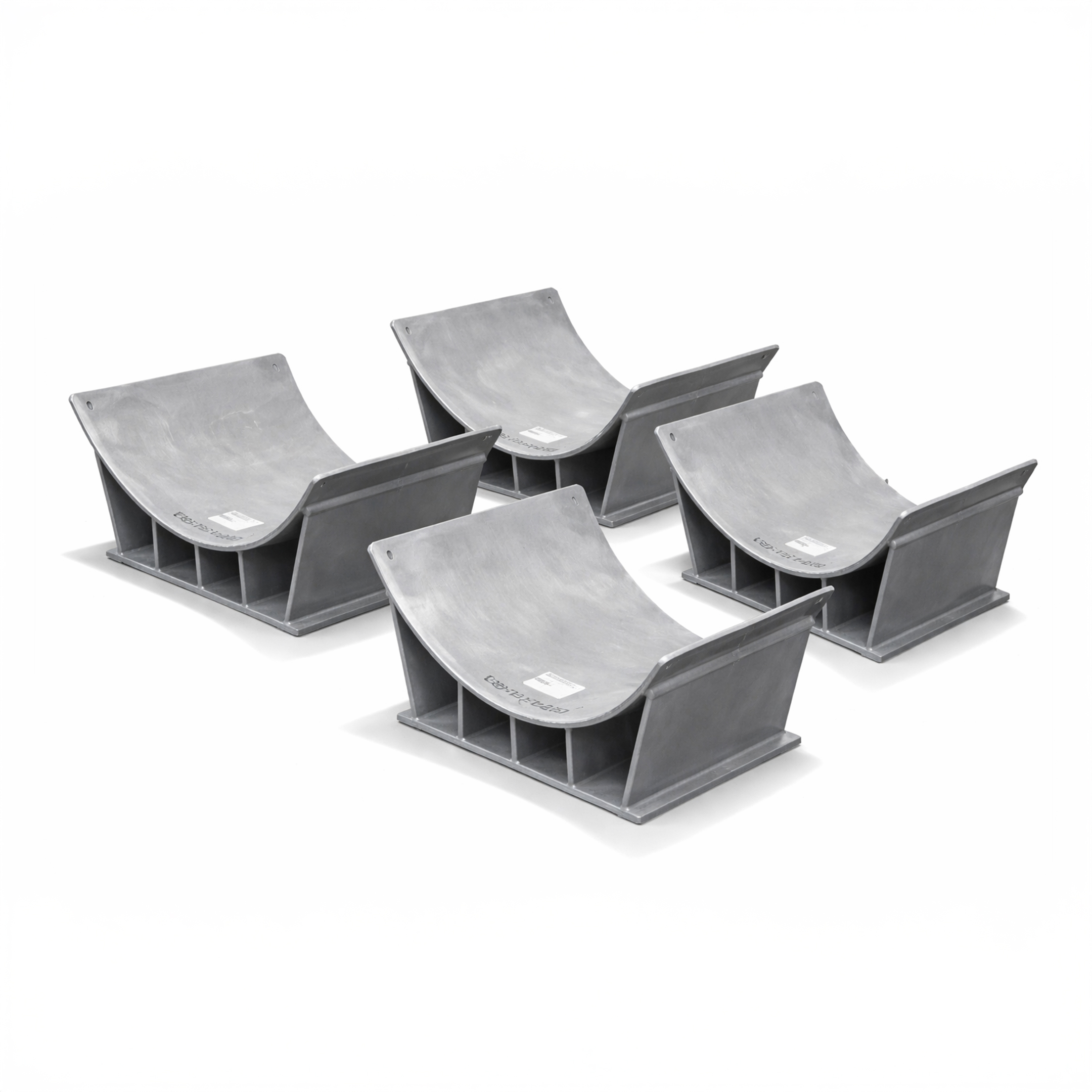
Metal saddles offer high strength and durability and are commonly used as permanent industrial pipe saddles in fixed installations. However, their weight makes handling difficult, and direct metal contact can cause abrasion or corrosion issues.
Concrete saddle
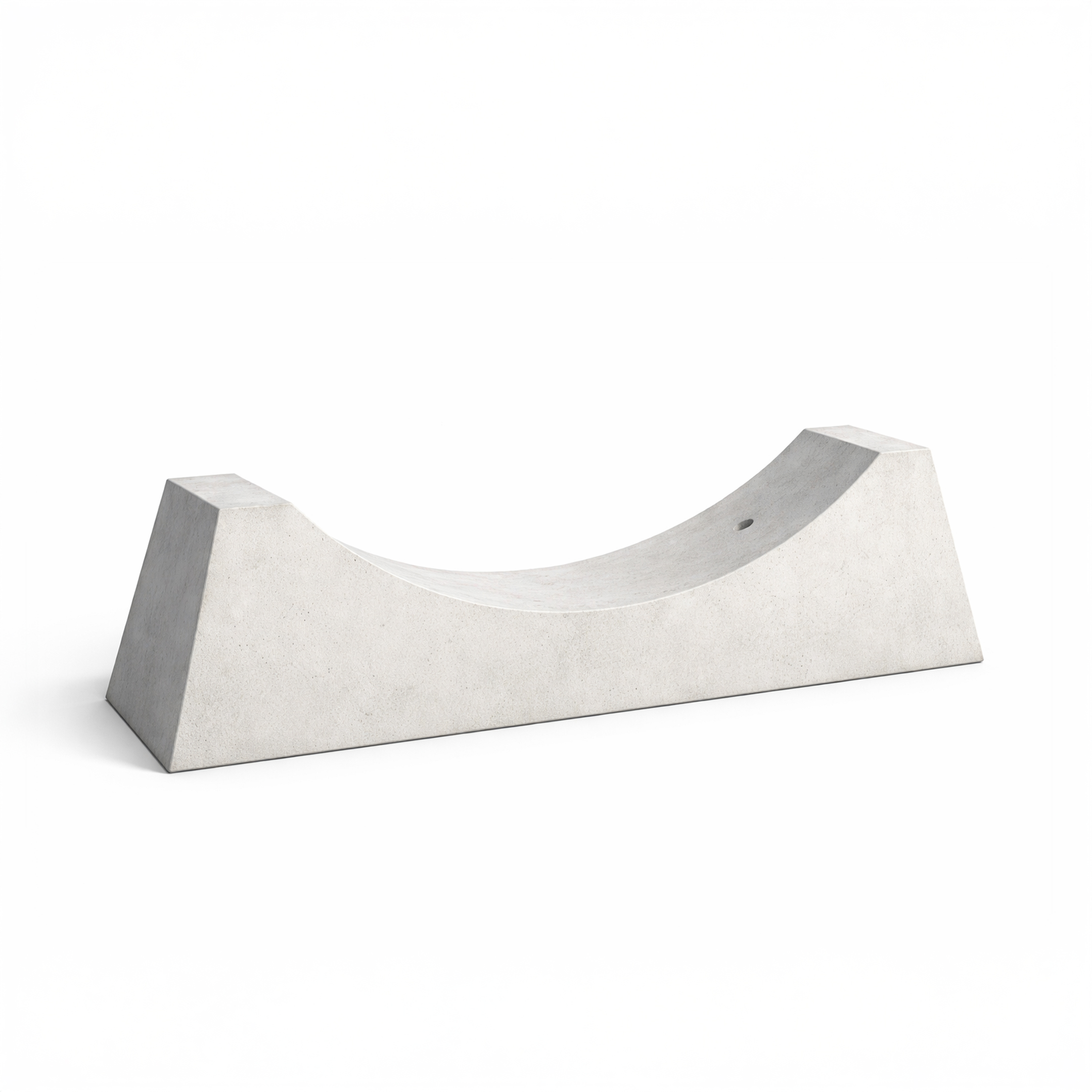
Concrete saddles are typically used where stability is required and mobility is not. Their high compressive strength makes them suitable for infrastructure projects, but their extreme weight limits transport applications.
Engineered polymer saddles
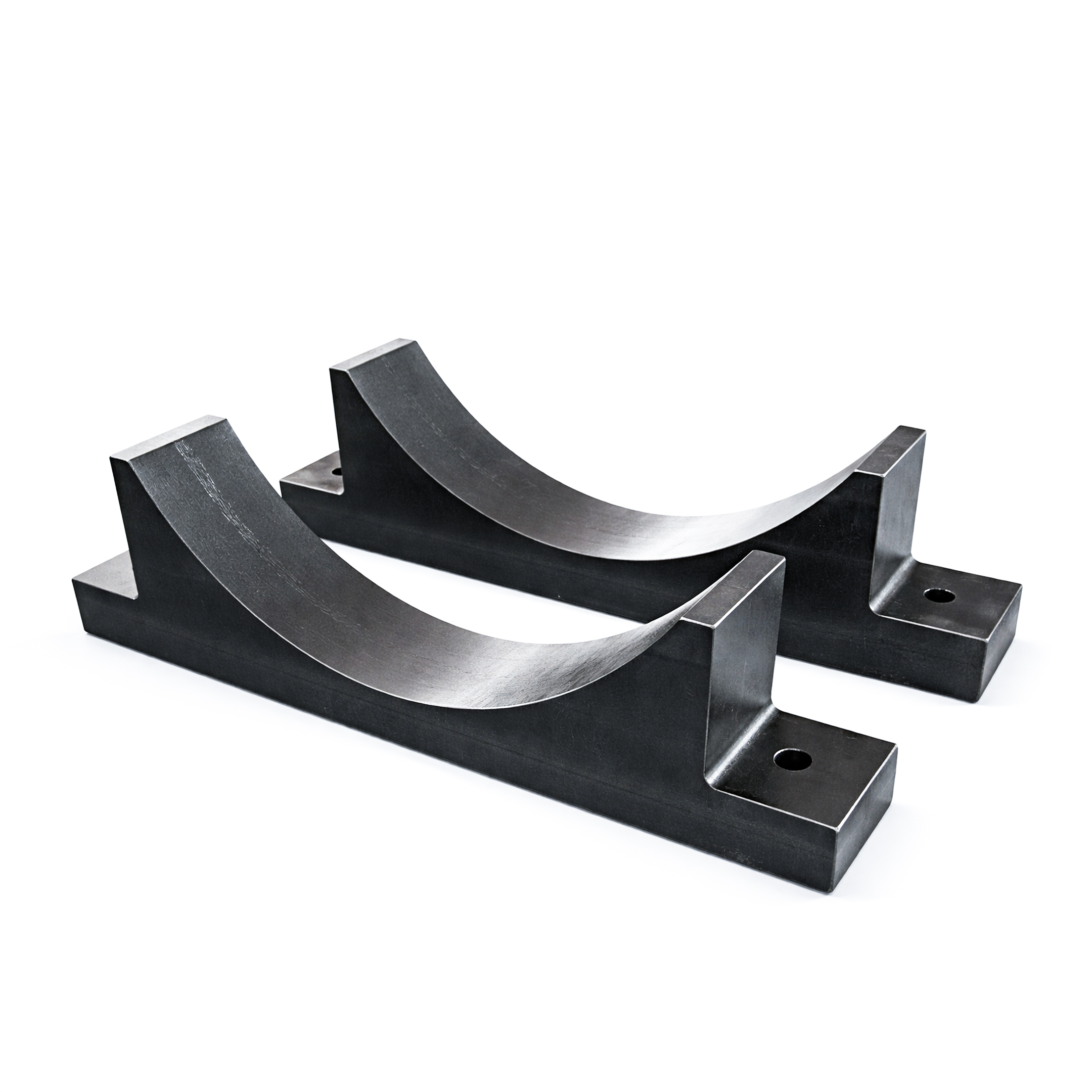
Modern industries are increasingly adopting engineered polymer solutions, particularly expanded polypropylene foam. Expanded Polypropylene (EPP) industrial saddles provide a balanced combination of strength, protection, and reusability that traditional materials struggle to achieve.
Why EPP industrial saddles are gaining importance
Expanded polypropylene foam offers a unique set of performance characteristics that make it ideal for demanding industrial environments, including pipe support, cylindrical product packaging, and custom-moulded EPP saddle applications.
Lightweight with high load capacity
EPP saddles are significantly lighter than wood, metal or concrete alternatives, allowing easier handling and reducing the risk of workplace injury. Despite their low weight, they can support heavy loads without permanent deformation.
This makes them suitable as pipe support saddles for large-diameter pipes and other heavy cylindrical equipment, including use cases commonly seen in India and broader cylindrical product support packaging applications.
Superior surface protection
Many industrial products are coated for corrosion resistance or finished to tight tolerances. EPP provides a cushioning interface that protects these surfaces from scratches, dents and abrasion.
This property is particularly valuable for industrial pipe saddles used with coated pipelines or precision-manufactured components, where consistent, non-abrasive support is critical.
Impact resistance and durability
EPP absorbs impact energy and returns to its original shape, unlike brittle materials that crack under sudden loads. This resilience ensures long service life even under repeated handling conditions.
Reusability and lifecycle efficiency
Reusable saddles reduce waste generation and lower long-term operational costs, especially in applications such as pressure vessel support and custom-moulded EPP saddle solutions used across industries. In contrast, wooden supports often become unusable after a single shipment.</span >
Weather and chemical resistance
EPP does not absorb moisture and performs reliably in outdoor environments. It resists many chemicals and maintains structural integrity across a wide temperature range, typically from -40°C to +120°C.
Uses of EPP saddles across industries
EPP industrial saddles are used wherever cylindrical products require stable support.
Pipe and infrastructure sector
Large pipelines for water, oil, or gas require reliable support during storage and transport. Pipe support saddles made from EPP prevent rolling, maintain alignment, and protect external coatings.
Oil and gas industry
Pressure vessels, separators and pipeline sections often need temporary supports during fabrication and shipment. Saddles for pressure vessels made from EPP provide stability without damaging protective layers.
Steel and metals industry
Steel coils and rolled products are heavy yet vulnerable to deformation. Saddles for cylindrical products distribute load evenly while preventing surface damage.
Equipment manufacturing
Boilers, tanks and heat exchangers must be transported safely over long distances. EPP saddles provide cushioning and stability throughout handling operations.
Logistics and export packaging
Global supply chains involve multiple handling stages. Saddles for transportation and storage made from EPP help maintain product integrity across complex logistics routes.
Key features of EPP industrial saddles
High-performance EPP saddles incorporate several design features that enhance safety and usability.
Optimised cradle geometry
Shapes are tailored to specific diameters and load requirements, ensuring secure positioning and minimal movement.
Stackability and modularity
Many designs allow efficient stacking of supported products while enabling compact storage of empty saddles.
Non-abrasive contact surface
The material protects painted, coated or polished surfaces from damage.
Thermal stability
EPP maintains performance across a wide range of temperatures, making it suitable for diverse climates.
Handling safety
Lightweight construction reduces strain on workers and improves operational efficiency.
Compatibility with modern manufacturing
EPP saddles are moulded from expanded polypropylene beads, allowing accurate shapes, repeatable quality and reliable cushioning performance.
Sustainability advantages
Reusable EPP saddles contribute to sustainability goals by reducing reliance on disposable materials. Their long service life lowers resource consumption and waste generation.
At the end of their lifecycle, EPP components can be recycled, supporting responsible material management. EPP’s production emits fewer greenhouse gases than comparable materials and its recyclability supports circular economy targets. This contrasts with traditional wooden supports that are frequently discarded after use.
At the end of their lifecycle, EPP components can be recycled, supporting responsible material management. This contrasts with traditional wooden supports that are frequently discarded after use.
Conclusion
Industrial saddles are essential industrial support structures for safely handling cylindrical equipment across sectors. While traditional materials such as wood, metal and concrete continue to be used, engineered polymer solutions are transforming performance expectations.
Expanded polypropylene foam saddles combine strength, protection, durability and reusability in a single solution. By stabilising heavy cylindrical loads, protecting surfaces and improving handling safety, they enable more efficient storage and transportation of critical industrial assets.
As industries increasingly prioritise operational efficiency, safety and sustainability, EPP industrial saddles are becoming a preferred choice for modern applications involving pipes, vessels and other cylindrical products. To explore how engineered polymer saddles can be integrated into your application, you can connect with K. K. Nag to discuss specific use cases, custom requirements and material considerations aligned with your operational needs.
Featured Blogs
EPP Dunnage Solutions for Sensitive Electronic and Sensor Components
Modern electronics manufacturing relies on the continuous movement of sensitive components between suppliers, production facilities and assembly plants. Printed circuit board (PCB) assemblies, sensor modules, electronic control units [...]
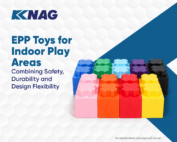
EPP Toys for Indoor Play Areas: Combining Safety, Durability and Design Flexibility
Indoor play spaces have evolved far beyond simple playrooms with a handful of toys. Today's schools, daycare centres, activity zones, children's museums and family entertainment centres are creating [...]
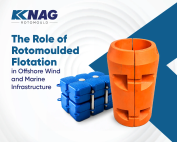
The Role of Rotomoulded Flotation in Offshore Wind and Marine Infrastructure
Offshore renewable energy is ushering in a new phase of growth as countries invest in cleaner power generation and strong coastal infrastructure. Alongside offshore wind farms, marine industries [...]
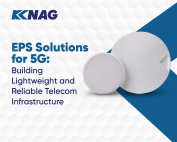
EPS Solutions for 5G: Building Lightweight and Reliable Telecom Infrastructure
The global rollout of 5G networks is transforming industries by enabling faster connectivity, lower latency and support for emerging technologies such as the Internet of Things (IoT), autonomous [...]
Get in Touch with Us
We look forward to connecting with you!