How Rotomoulding Supports OEMs in Earth-Moving Vehicle Manufacturing
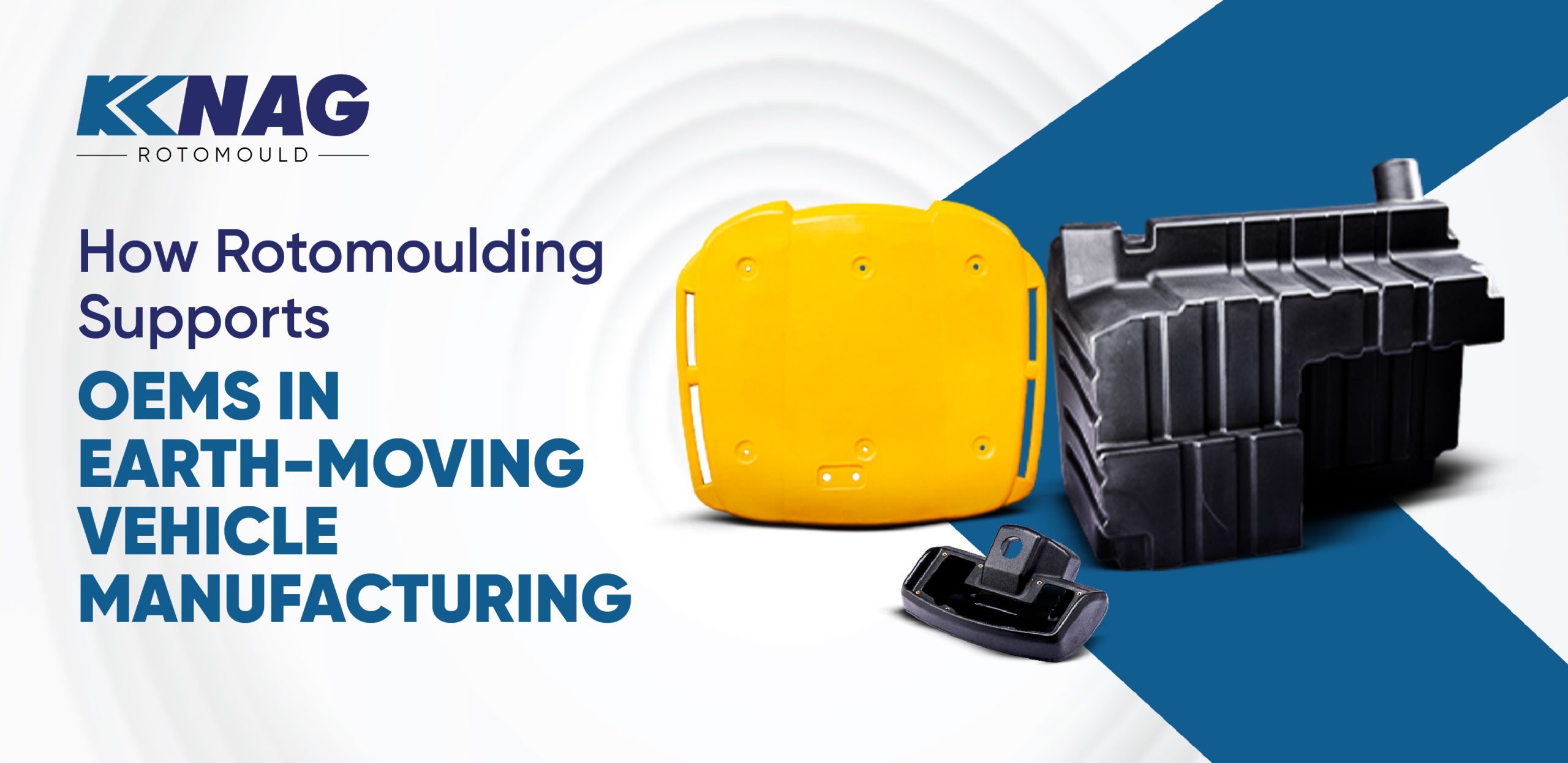
Table of Contents
- 01. Overview of the earth-moving vehicle industry
- 02. Role of OEMs in earth-moving vehicles
- 03. Impact of CEV Stage V Emission Norms on Material Selection
- 04. Why rotomoulding is ideal for earth-moving vehicles
- 05. Key advantages of rotomoulding for OEMs
- 06. Applications of rotomoulding in earth-moving vehicles
- 07. Key Takeaways
Earth-moving vehicles are fundamental to modern infrastructure development. From excavators and loaders to bulldozers and dump trucks, these machines enable large-scale construction, mining, and land development projects around the world. Since these machines operate in demanding environments, manufacturers must ensure that every component delivers durability, reliability, and long service life.
For Original Equipment Manufacturers (OEMs), selecting the right manufacturing processes and materials is critical to achieving these goals.
Rotomoulding for earth-moving vehicles has become an important solution for producing durable plastic components, such as fuel tank construction machinery, plastic hydraulic reservoir heavy equipment, and rotomoulded toolbox construction vehicle applications that perform reliably under harsh operating conditions.
Overview of the earth-moving vehicle industry
The earth-moving vehicle industry plays a central role in sectors such as construction, mining, infrastructure development, and agriculture. These machines are designed to perform heavy-duty tasks, including excavation, material handling, grading, and site preparation.
Equipment in this category includes:
- Excavators
- Bulldozers
- Wheel loaders
- Motor graders
- Dump trucks
These machines are typically used in environments where exposure to dust, mud, rocks, and extreme weather conditions is common. As a result, components used in earth-moving machinery must withstand vibration, mechanical stress, and long operating hours without failure.
Manufacturers are therefore constantly exploring ways to improve component durability while managing weight, production efficiency, and cost.
Role of OEMs in earth-moving vehicles
OEMs are responsible for the design, development, and manufacturing of earth-moving machinery components that ensure equipment performance and reliability. Their responsibilities include:
- Designing machine systems and structural assemblies
- Selecting suitable materials for different components
- Ensuring compatibility with hydraulic, fuel, and electrical systems
- Meeting safety and environmental regulations
Since heavy equipment often operates continuously in remote locations, OEMs must prioritise durability and ease of maintenance. Components that fail prematurely can result in costly downtime and operational delays.
To address these challenges, OEMs increasingly rely on advanced manufacturing processes that allow flexible design, strong materials, and efficient production.
This has led to the growing role of a rotomoulding OEM manufacturer India in supporting customised, application-specific component development.
Impact of CEV Stage V Emission Norms on Material Selection
India’s introduction of Construction Equipment Vehicle (CEV) Stage V emission norms in 2025 marks a significant shift in how construction and heavy equipment are designed and manufactured. These stricter regulations focus on reducing emissions, which in turn places greater pressure on OEMs to improve fuel efficiency and optimise machine performance.
- Lower emissions targets are driving the need for lighter machine designs
- Reducing overall equipment weight helps improve fuel efficiency and engine performance
- OEMs are actively exploring alternatives to traditional metal components
This shift is accelerating the demand for CEV Stage V lightweight components, where weight optimisation directly contributes to compliance and operational efficiency.
- Rotomoulded products offer weight reduction without compromising structural strength
- They provide corrosion resistance, reducing maintenance requirements in harsh environments
- The process enables complex, integrated designs, reducing the need for multiple assemblies
As emission norms become more stringent, the shift towards lightweight and efficient materials is expected to accelerate. Rotational moulding, therefore, is not just a manufacturing choice but a strategic response to evolving regulatory and performance demands in the construction equipment industry.
Why rotomoulding is ideal for earth-moving vehicles
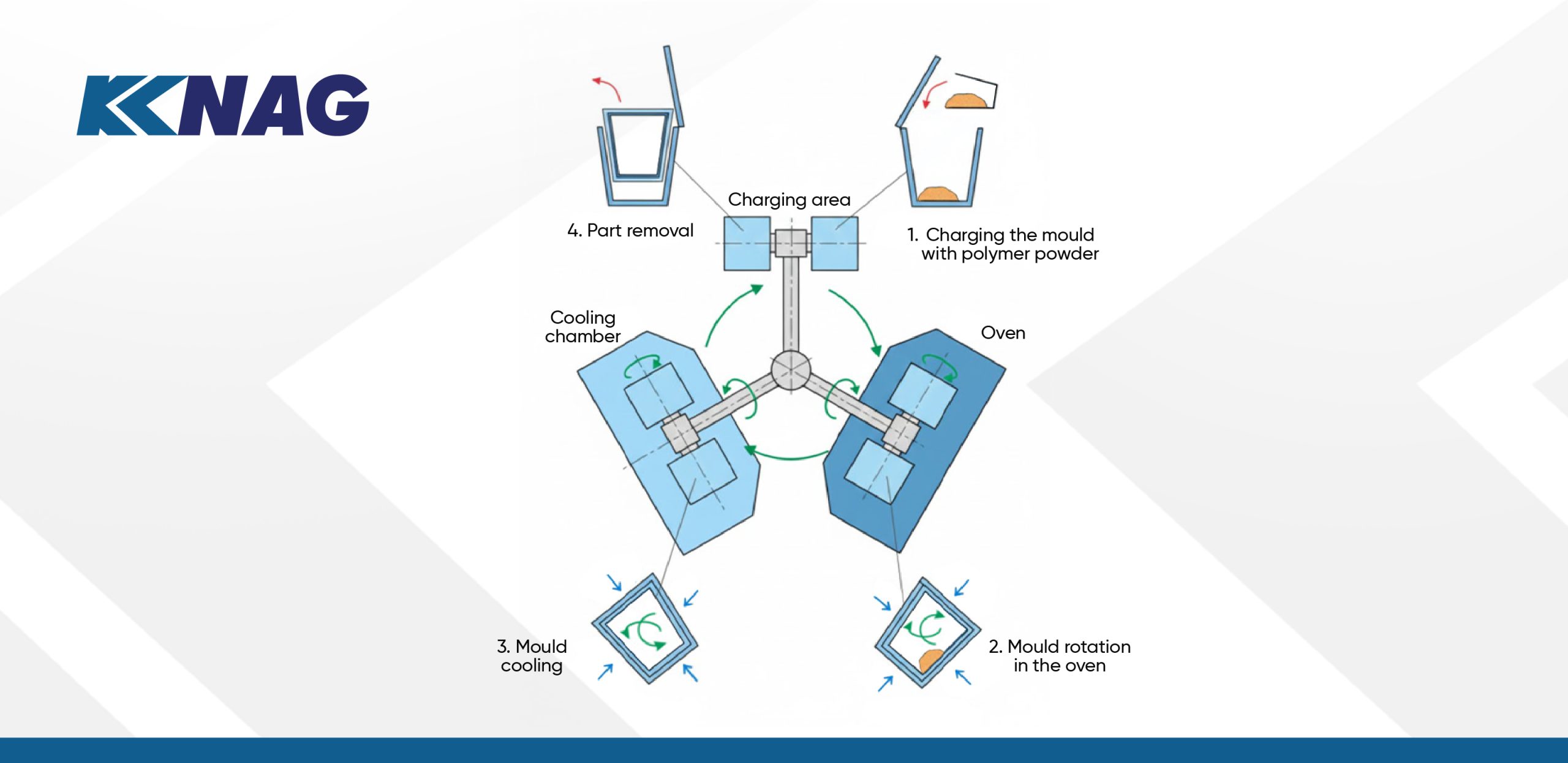
Rotational moulding is a controlled manufacturing process used to create seamless, hollow plastic products with uniform wall thickness and high structural integrity. Most components are produced from polyethylene, particularly linear low-density (LLDPE) or high-density polyethylene (HDPE), chosen for their toughness and chemical resistance.
Here’s a step-by-step process:
- Powdered plastic, such as HDPE or LLDPE, is placed inside a hollow mould made of aluminium or steel
- The mould is closed and heated inside an oven while rotating slowly on two axes
- As the mould rotates, the plastic melts and spreads evenly across the inner surface
- This continuous movement ensures smooth, uniform wall formation without weak points
- Once the required thickness is achieved, the mould keeps rotating during cooling to maintain shape and strength
- After cooling, the mould is opened, and the finished product is removed for further processing or use
For heavy equipment manufacturers, rotomoulding offers several advantages. The process enables the production of rotomoulded components for heavy vehicles that are lightweight yet durable. These characteristics make rotomoulding applications in heavy equipment particularly valuable where impact resistance and corrosion protection are essential.
Key advantages of rotomoulding for OEMs
Rotomoulding offers multiple benefits that support OEM requirements in earth-moving vehicle manufacturing.
Seamless and durable components
Rotomoulded parts are produced as a single piece without weld lines or joints. This seamless structure reduces potential weak points and improves durability, especially in fluid storage applications such as fuel tanks or hydraulic reservoirs.
Uniform wall thickness
The rotational moulding process distributes material evenly throughout the mould. This results in consistent wall thickness across the component, improving impact resistance and structural stability.
For earth-moving machinery components that face vibration and mechanical stress, uniform thickness contributes to longer service life.
Design flexibility
Rotomoulding allows engineers to design complex shapes that may be difficult to produce through other manufacturing methods. Features such as ribs, inserts, and mounting points can be integrated directly into the moulded part.
This design flexibility enables OEMs to optimise the shape of components for available space within the machine while maintaining performance.
Lower tooling investment
Rotomoulding tools are generally less expensive than those used in high-pressure moulding processes. This allows OEMs to develop specialised components for different vehicle models without excessive tooling costs.
Lower tooling investment also supports faster design iterations during product development.
Corrosion resistance
Many rotomoulded parts are made from polyethylene materials that resist corrosion, moisture and chemical exposure. This is particularly important for machines operating in outdoor environments where metal components may be susceptible to rust.
Weight reduction
Replacing metal components with plastic alternatives can significantly reduce overall machine weight. Lightweight rotomoulded parts for construction machinery help improve fuel efficiency while simplifying installation and maintenance.
Applications of rotomoulding in earth-moving vehicles
Rotomoulding applications in heavy equipment span several functional components used across different types of machinery.
Fuel tanks
Rotomoulded fuel tanks are commonly used in construction machinery. Their seamless construction reduces the risk of leaks, while corrosion resistance improves durability compared with traditional metal tanks.
Hydraulic and fluid reservoirs
Hydraulic systems are essential in earth-moving equipment. Rotomoulded reservoirs provide reliable containment for hydraulic fluids, coolant and other liquids used in machine operation.
Toolboxes and storage compartments
Many machines include integrated toolboxes and storage compartments for operators and maintenance crews. Rotomoulded designs provide durable and weather-resistant storage solutions.
Protective covers and guards
Rotomoulded parts for construction machinery are often used as protective covers for batteries, electrical systems and other sensitive components. These covers shield equipment from dust, debris and weather exposure.
Air ducts and housings
Complex air intake ducts and equipment housings can also be produced using rotomoulding. The ability to create hollow shapes allows efficient airflow design while maintaining structural strength.
These applications demonstrate how rotomoulded components for heavy vehicles support both functional performance and equipment durability.
For manufacturers developing advanced rotational moulding products, this process offers a practical way to produce large plastic components that meet the demanding requirements of construction machinery.
Key Takeaways
Earth-moving vehicles operate in some of the most demanding industrial environments. For OEMs, selecting manufacturing processes that deliver durable, corrosion-resistant and lightweight components is essential for reliable machine performance.
Rotomoulding for earth-moving vehicles provides several advantages, including seamless construction, uniform wall thickness, design flexibility, and resistance to harsh operating conditions. These benefits make rotomoulding applications in heavy equipment an important part of modern machinery manufacturing. As OEMs continue to seek durable and efficient manufacturing solutions for earth-moving machinery components, rotomoulding offers a practical way to produce lightweight, corrosion-resistant and high-performance parts designed for demanding operating conditions.
At K. K. Nag, we develop engineered polymer components for industrial and heavy equipment applications, including customised rotomoulded parts designed to meet specific operational requirements. Explore our range of rotomoulded solutions or connect with our engineering team to discuss how rotomoulding can support your next heavy equipment project.
Featured Blogs
EPP Dunnage Solutions for Sensitive Electronic and Sensor Components
Modern electronics manufacturing relies on the continuous movement of sensitive components between suppliers, production facilities and assembly plants. Printed circuit board (PCB) assemblies, sensor modules, electronic control units [...]

EPP Toys for Indoor Play Areas: Combining Safety, Durability and Design Flexibility
Indoor play spaces have evolved far beyond simple playrooms with a handful of toys. Today's schools, daycare centres, activity zones, children's museums and family entertainment centres are creating [...]
The Role of Rotomoulded Flotation in Offshore Wind and Marine Infrastructure
Offshore renewable energy is ushering in a new phase of growth as countries invest in cleaner power generation and strong coastal infrastructure. Alongside offshore wind farms, marine industries [...]

EPS Solutions for 5G: Building Lightweight and Reliable Telecom Infrastructure
The global rollout of 5G networks is transforming industries by enabling faster connectivity, lower latency and support for emerging technologies such as the Internet of Things (IoT), autonomous [...]
Get in Touch with Us
We look forward to connecting with you!