Global Market Trends in Rotomoulding in 2026: Key Drivers and Innovations
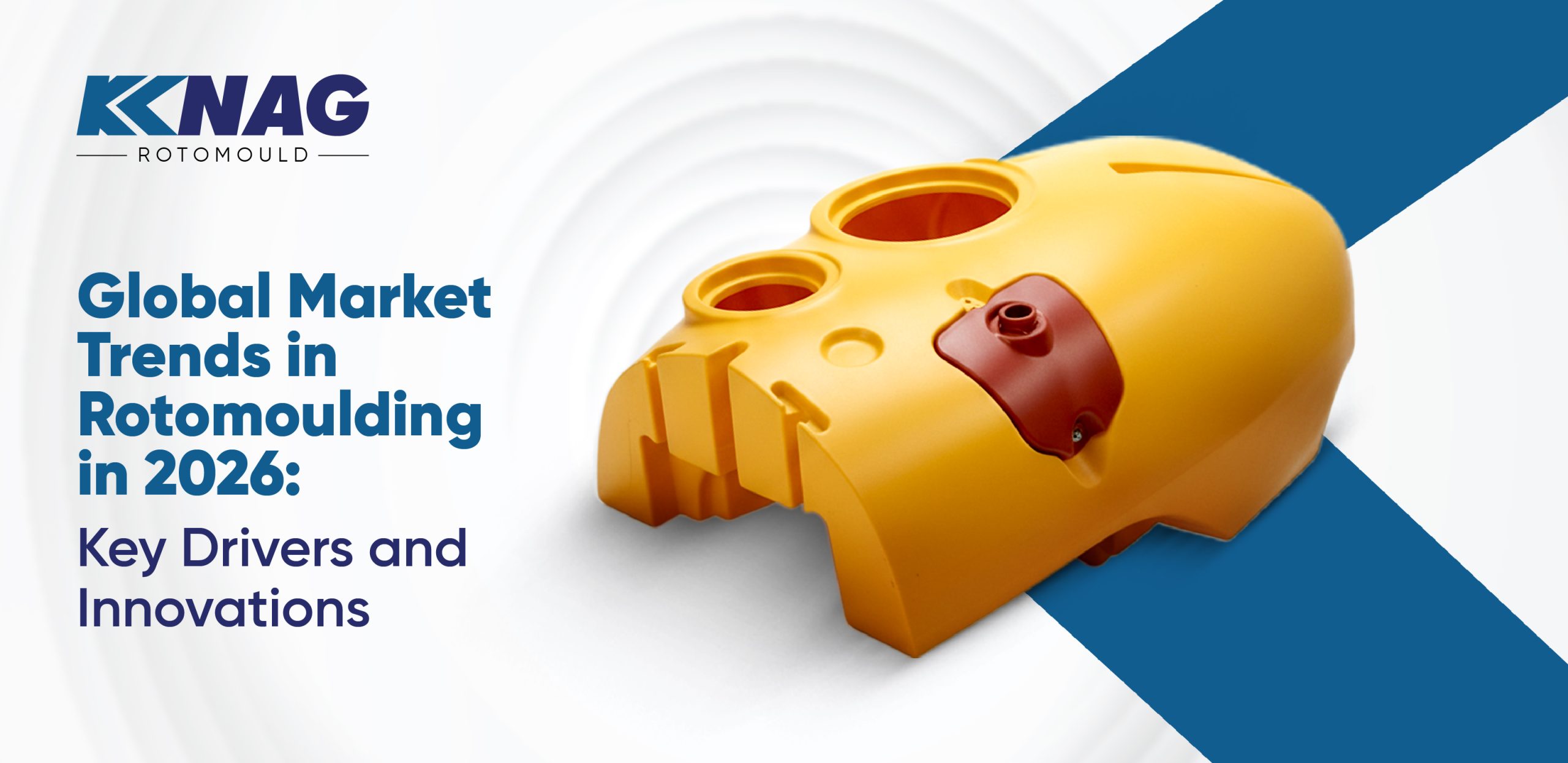
The global rotational moulding industry is entering 2026 on a steady growth path, driven by demand for durable, lightweight and material-efficient polymer components. As the automotive, agriculture, construction and marine sectors expand, the use of rotomoulded products is increasing across regions and applications.
Given the fragmented nature of the rotomoulding industry and variations in how different studies define market scope (materials, machinery or finished products), this blog focuses on directional trends, technology drivers and application growth rather than standalone market size figures.
Table of Contents
- 01. Material Dominance and Market Composition
- 02. Key Drivers of Growth for Rotomoulding Market Trends 2026
- 03. Technological Advancements and Rotomoulding Innovations
- 04. Global Trends Influencing Rotomoulding Practices in India
- 05. Opportunities for OEMs and Tier-1 Suppliers
- 06. Outlook for 2026 and Beyond
Material Dominance and Market Composition
Polyethylene remains the dominant material used in rotational moulding, owing to its balance of mechanical strength, chemical resistance, durability and cost efficiency. The polyethylene family, including HDPE, LLDPE and LDPE grades, is widely used for engineered housings, functional ducts, impact-absorbing components and integrated structural assemblies across automotive, industrial and infrastructure applications.
Ongoing developments in polyethylene resin formulations have further improved UV stability, mechanical performance and recyclability, enabling rotomoulded components to meet stricter durability, environmental and lifecycle requirements in demanding operating conditions.
Key Drivers of Growth for Rotomoulding Market Trends 2026
Several factors are influencing the rotomoulding market trends of 2026, shaping both demand and innovation:
- Product versatility: Rotomoulding supports complex geometries, seamless structures and uniform wall thickness, making it suitable for diverse uses such as agricultural sprayer tanks, automotive interior components and playground equipment.
- Durability and long life: Components produced through rotational moulding are corrosion-free, weather-resistant and capable of withstanding mechanical stress, extending their operational lifespan.
- Design flexibility: The process allows for customisation in size, colour and texture, supporting varied industry applications without requiring expensive tooling modifications.
- Sustainability initiatives: Using recycled material in the manufacture of rotomoulded products reduces waste and helps lessen harmful effects on the environment.
Technological Advancements and Rotomoulding Innovations
Technological advancements in rotational moulding are increasingly focused on improving precision, process stability and manufacturing productivity. A key shift in recent years has been the adoption of electric rotomoulding machines, which offer finer control over rotational speed, heating cycles and cooling profiles compared to conventional systems. This enables tighter tolerances, improved repeatability and more consistent part quality for engineered applications.
Automation and digital monitoring are also playing a growing role in modern rotomoulding operations. The integration of sensors, data logging and IoT-enabled systems allows manufacturers to track process parameters in real time, optimise cycle times and improve overall equipment efficiency. These process-led innovations are helping rotomoulding evolve into a more controlled and industrially scalable manufacturing process, particularly for automotive, industrial and infrastructure components.
Global Trends Influencing Rotomoulding Practices in India
As advancements in materials, process control and automation reshape rotational moulding, their adoption and impact vary across regions. Understanding how these developments play out in key manufacturing markets provides useful context for how rotomoulding practices are evolving in India.
Asia-Pacific: Manufacturing and Consumption Hub
Asia-Pacific has emerged as one of the most active regions for rotational moulding, supported by a strong base of polymer processing capability, tooling expertise and application-driven demand. Countries such as India and China have seen widespread adoption of rotomoulding across water storage, sanitation, infrastructure safety and agricultural applications.
Growth drivers:
- Rapid urbanisation in India and China
- Strong demand for automotive systems, industrial components and engineered assemblies
- Competitive manufacturing costs and expanding export capacity
Industry publications and polymer ecosystem studies highlight Asia-Pacific not through absolute market size figures, but through the breadth of applications and sustained capacity addition in rotational moulding across civic, industrial and infrastructure use cases.
Europe: Sustainability and Regulatory Compliance
Europe is one of the regions at the forefront of sustainability-led innovation in rotomoulding.
Growth drivers:
- Adoption of recycled resins and bio-based polymers
- Greater focus on circularity and credible sustainability claims across polymer value chains
In Europe, sustainability is not only compliance-driven but a central part of the innovation strategy.
For Indian manufacturers supplying export markets or global OEM supply chains, this translates into higher expectations on material traceability, recycled content documentation and sustainability-led compliance readiness.
North America: Automation and Advanced Materials
North America is often referenced for manufacturing automation and process control maturity, influencing how engineered polymer components are produced with tighter consistency and traceability.
Growth drivers:
- Robotic demoulding and process automation
- Industry 4.0-enabled monitoring and quality control
- Advanced materials such as XLPE and high-performance nylons for high-heat and high-stress applications
In the Indian context, OEMs and industrial buyers are increasingly expecting controlled processes, measurable quality consistency and material performance validation for high duty applications.
Opportunities for OEMs and Tier-1 Suppliers
Rotomoulding offers strong strategic opportunities for OEMs and Tier-1 suppliers who collaborate early in the design and development process.
Custom-Engineered Rotomoulded Assemblies
Rotomoulding enables the consolidation of multiple parts into single-piece or integrated assemblies, reducing fasteners, sealing interfaces and system complexity. This approach lowers weight, minimises potential failure points and enhances overall reliability.
Design-Led Innovation and Early-Stage Collaboration
The greatest value emerges when rotomoulding is considered from the concept stage. Early collaboration between OEMs, Tier-1 suppliers and rotomoulders allows components to be optimised for performance, manufacturability and cost efficiency from the outset.
Value Creation Through Manufacturing Consistency
Rotational moulding supports stable and repeatable production once a component design is validated. Consistent wall thickness, controlled cycle parameters and low tooling variability allow components to be produced at scale with predictable quality and minimal process drift. This reliability supports long-term program execution and manufacturing consistency across industrial and automotive applications.
Outlook for 2026 and Beyond
The global rotomoulding market is expected to maintain steady growth through 2026. Expanding applications in Type IV hydrogen storage liners for heavy commercial vehicles and EV battery cooling ducts will further contribute to this momentum, moving rotomoulding into high-tech precision manufacturing. Polyethylene’s dominance, supported by ongoing innovations in resin formulation and moulding processes, will continue to define the industry’s material landscape.
At K. K. Nag, we closely track global developments. Our experience enables us to design customised, reliable, high-performance rotational moulding products for a wide range of industrial and environmental needs. Through ongoing technical refinement and responsible material use, we aim to contribute meaningfully to the evolving global standards in rotational moulding.
Featured Blogs
EPP Dunnage Solutions for Sensitive Electronic and Sensor Components
Modern electronics manufacturing relies on the continuous movement of sensitive components between suppliers, production facilities and assembly plants. Printed circuit board (PCB) assemblies, sensor modules, electronic control units [...]
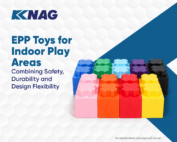
EPP Toys for Indoor Play Areas: Combining Safety, Durability and Design Flexibility
Indoor play spaces have evolved far beyond simple playrooms with a handful of toys. Today's schools, daycare centres, activity zones, children's museums and family entertainment centres are creating [...]
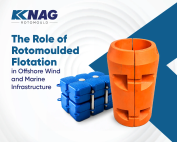
The Role of Rotomoulded Flotation in Offshore Wind and Marine Infrastructure
Offshore renewable energy is ushering in a new phase of growth as countries invest in cleaner power generation and strong coastal infrastructure. Alongside offshore wind farms, marine industries [...]

EPS Solutions for 5G: Building Lightweight and Reliable Telecom Infrastructure
The global rollout of 5G networks is transforming industries by enabling faster connectivity, lower latency and support for emerging technologies such as the Internet of Things (IoT), autonomous [...]
Get in Touch with Us
We look forward to connecting with you!