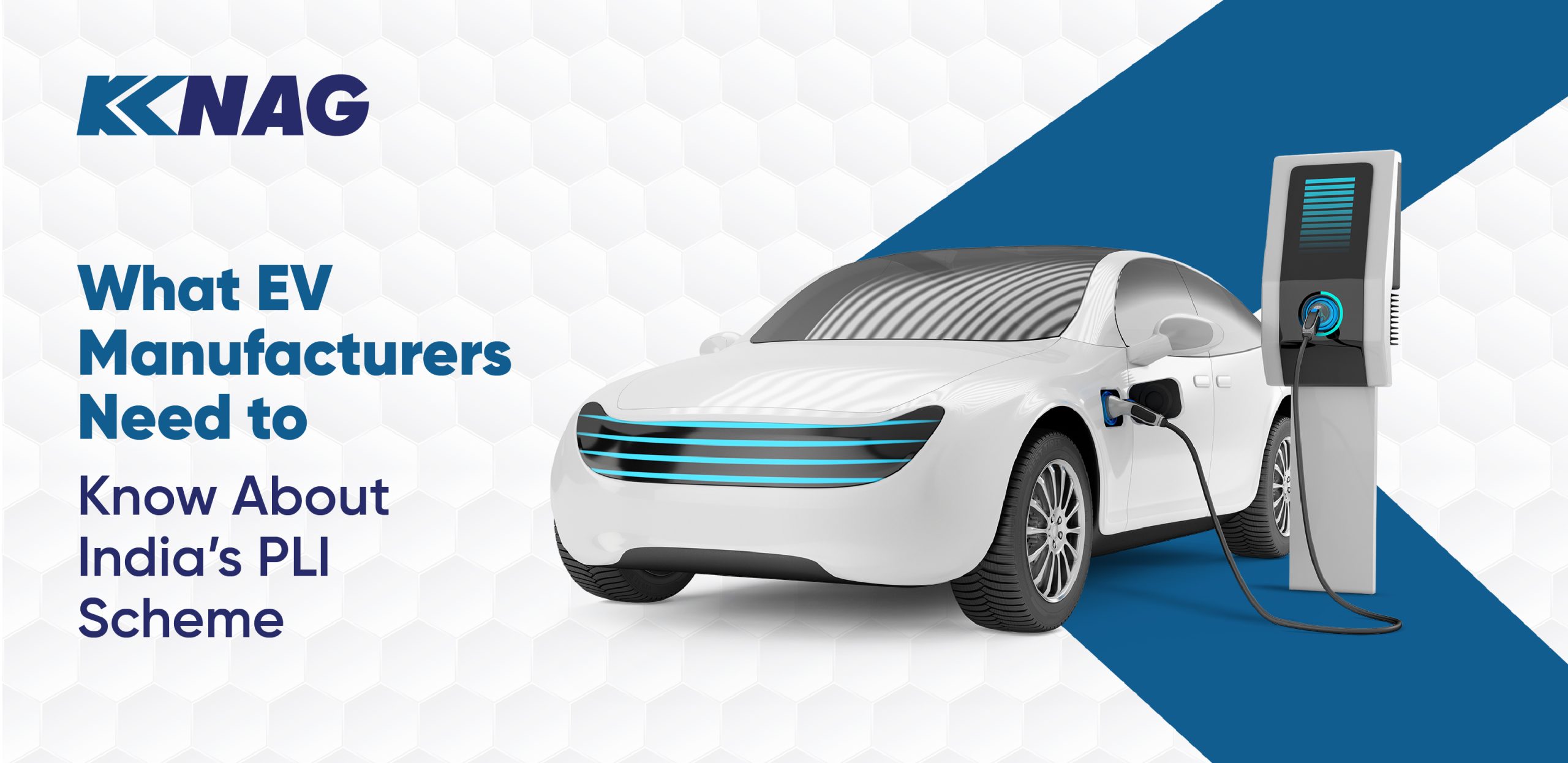
What EV Manufacturers Need to Know About India’s PLI Scheme
India’s transition towards electric mobility is accelerating due to rising sustainability goals, localisation mandates and ongoing technological shifts in the automotive sector. The Production Linked Incentive (PLI) scheme has become one of the central policy tools influencing EV manufacturing in India. For manufacturers, suppliers and component makers, understanding the structure and expectations of the PLI scheme in India is essential for planning production, investments and long-term capability building.
This article provides an overview of how the scheme works, the latest policy updates and the implications for EV manufacturing regulations in 2026 and beyond.
Table of Contents
- 01. Understanding the PLI Scheme for the Automotive Sector
- 02. Why the PLI Scheme Matters for EV Manufacturing in India
- 03. Key Criteria and Eligibility for Manufacturers
- 04. Impact on EV Components Manufacturing
- 05. Policy Updates and What to Expect by 2026
- 06. What EV Manufacturers Should Prioritise Today
- 07. Conclusion
Understanding the PLI Scheme for the Automotive Sector
The PLI scheme for the automotive sector was introduced to strengthen domestic value addition while reducing import dependence with a ₹25,938 crore outlay over 5 years. It supports advanced automotive technologies that are critical to India’s EV roadmap.
The scheme covers:
- Battery electric vehicles
- Hydrogen fuel cell vehicles
- Advanced automotive components
- New-age mobility technologies aligned with global EV trends
The intent is to create a supplier ecosystem in India that is capable of producing critical EV components such as motors, controllers, battery packs, thermal management units and lightweight structural parts.
The structure of the scheme is based on incremental sales. Approved companies receive incentives if they achieve pre-defined sales growth targets for eligible EV components or vehicles.
Why the PLI Scheme Matters for EV Manufacturing in India
The rise of EV adoption has increased the need for localised components. Manufacturers are now expected to prioritise:
- Domestic sourcing of EV parts
- Development of indigenous technology
- Long-term supply chain reliability
- Cost control without compromising engineering performance
The PLI scheme in India encourages investments in these areas by rewarding advanced capability building rather than basic assembly. It pushes the industry to produce complete EV subsystems within India rather than depending on imports from global markets.
For EV components manufacturing, this includes specialised parts such as:
- Battery enclosures
- Lightweight crash structures
- Thermal insulation modules
- High-efficiency HVAC ducts for EV cabins
- Connectors, sensors and control electronics
- Structural foam and polymer-based modules that improve energy efficiency
Manufacturers who align production plans with these priority areas are more likely to benefit.
Key Criteria and Eligibility for Manufacturers
The PLI scheme has strict qualification criteria to make sure applicants focus on advanced technologies.
Important parameters include:
- A minimum threshold for domestic value addition
- Use of approved raw materials and processes
- Commitment to long-term localisation plans
- Demonstrated capability for scalable production
Manufacturers must also track compliance with reporting and documentation under the scheme. This includes audited financials, proof of incremental sales and adherence to Government schemes for EV production.
For EV suppliers, meeting these requirements can strengthen their partnerships with both domestic and global vehicle makers entering India.
Impact on EV Components Manufacturing
The scheme has accelerated investment in EV parts that directly influence vehicle safety, thermal stability and structural performance.
Some important changes in the EV components landscape include:
Growth in lightweight structural solutions
EVs demand reduced mass to improve range. Manufacturers are expanding capabilities in materials that combine durability with low weight. This includes advanced polymers, structural foams and precision moulded enclosures that support thermal insulation and crash energy management.
Rise of localised battery ecosystem
Cell manufacturing is supported under a separate PLI scheme for advanced chemistry cells. However, EV manufacturers must still develop localised solutions for:
- Battery spacers
- Cooling channels
- Fire-retardant housings
- Impact-resistant modules
These components must comply with EV safety regulations for 2026.
Improved thermal management engineering
Electric vehicles generate heat in different ways compared to internal combustion platforms. PLI incentives encourage the development of advanced insulation and thermal separation modules for battery packs and power electronics.
Electronic and sensor integration
With vehicle intelligence increasing, EV suppliers must build capability for sensors, connectors and electronic control housings within India. Local sourcing helps manufacturers achieve compliance under the PLI scheme and reduces supply chain risk.
Policy Updates and What to Expect by 2026
India’s EV policy landscape continues to evolve. Several themes are becoming clear for the 2026 horizon.
Greater localisation expectations
Future EV manufacturing regulations in 2026 will likely require higher domestic value addition across battery systems, thermal protection components and electronic submodules.
Focus on sustainability and recyclability
Extended Producer Responsibility norms are shaping how manufacturers design components for end-of-life recovery. PLI-supported projects are expected to incorporate recyclability considerations in design, materials and production.
Shift towards advanced EV safety
As India aligns with global safety benchmarks, components such as energy absorbers, structural foams and crash-impact modules must meet higher performance criteria. This will influence material choices, geometries and validation processes.
Strengthening the EV supplier ecosystem in India
The Government continues to encourage Tier 1 and Tier 2 suppliers to expand production capacity for specialised EV components, which in turn supports OEM localisation goals.
What EV Manufacturers Should Prioritise Today
To benefit from the PLI scheme and prepare for future regulatory expectations, EV manufacturers should focus on:
- Early engagement with domestic suppliers for critical EV components
- Long-term planning for eligibility under incentives
- Adoption of lightweight and energy-efficient materials
- Building traceable and compliant production systems
- Strengthening in-house design, testing and validation capabilities
- Monitoring R&D investments to align with evolving EV policies
Manufacturers who align these priorities with the PLI scheme’s incentive window through FY 2027–28 are better positioned to participate in India’s growing EV ecosystem
Conclusion
The PLI scheme in India remains central to the country’s EV strategy. It encourages deeper localisation, technological advancement and stronger EV components manufacturing. For EV makers and suppliers, understanding the scheme’s scope and aligning operations with policy expectations will become essential to remain competitive in the evolving landscape.
Featured Blogs
EPP Dunnage Solutions for Sensitive Electronic and Sensor Components
Modern electronics manufacturing relies on the continuous movement of sensitive components between suppliers, production facilities and assembly plants. Printed circuit board (PCB) assemblies, sensor modules, electronic control units [...]

EPP Toys for Indoor Play Areas: Combining Safety, Durability and Design Flexibility
Indoor play spaces have evolved far beyond simple playrooms with a handful of toys. Today's schools, daycare centres, activity zones, children's museums and family entertainment centres are creating [...]
The Role of Rotomoulded Flotation in Offshore Wind and Marine Infrastructure
Offshore renewable energy is ushering in a new phase of growth as countries invest in cleaner power generation and strong coastal infrastructure. Alongside offshore wind farms, marine industries [...]

EPS Solutions for 5G: Building Lightweight and Reliable Telecom Infrastructure
The global rollout of 5G networks is transforming industries by enabling faster connectivity, lower latency and support for emerging technologies such as the Internet of Things (IoT), autonomous [...]
Get in Touch with Us
We look forward to connecting with you!