Custom Rotomoulded Flotation Solutions for Marine and Industrial OEMs
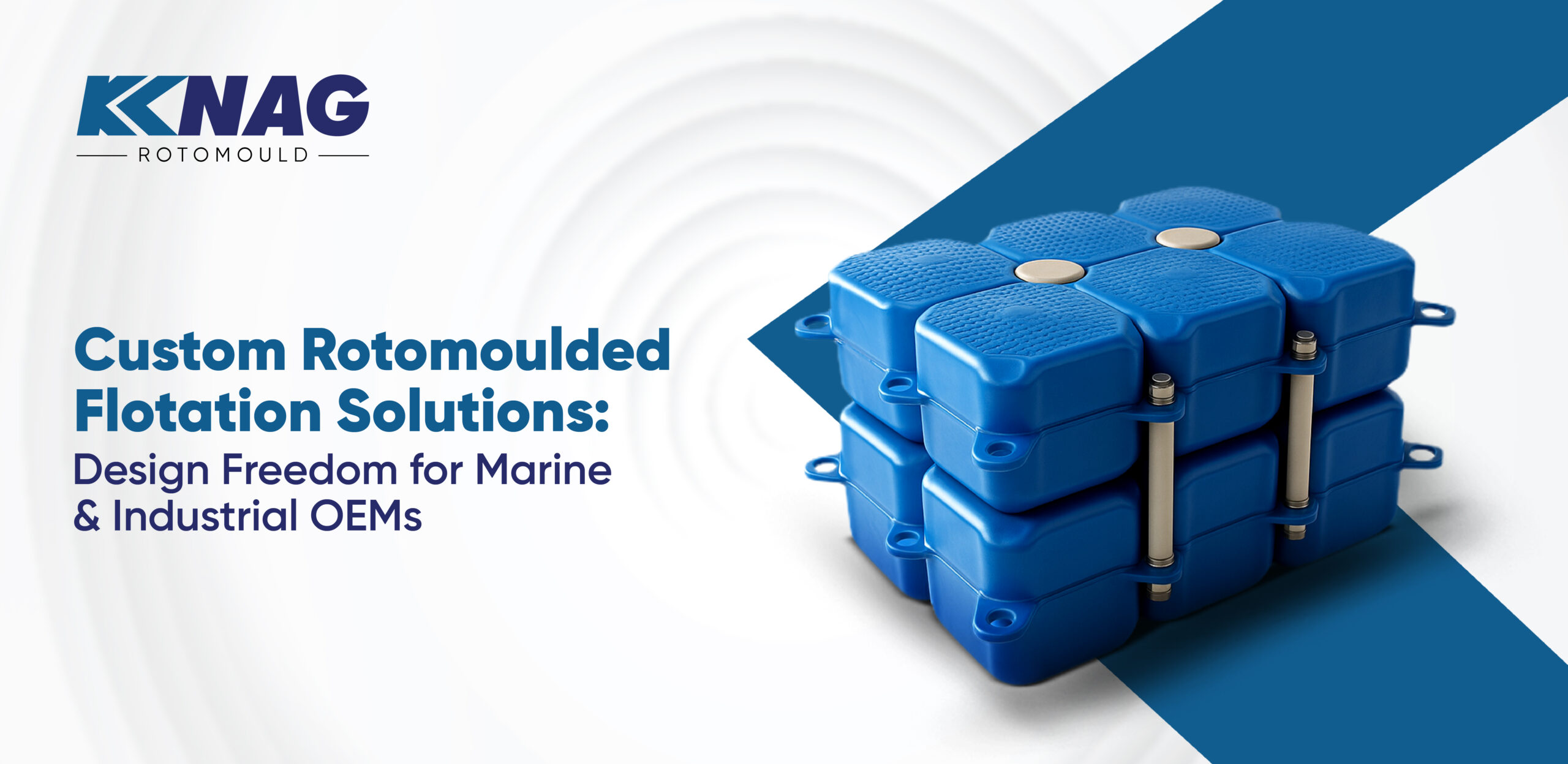
Flotation sits at the core of many marine and industrial programmes. Buoys must remain visible in changing seas, dredge lines need stable support across long runs and pontoons or aquaculture frames must withstand impact, ultraviolet exposure and repeated loading. These demands call for components that balance tuned buoyancy with rugged service life and practical assembly. Rotomoulding offers a useful pathway for this brief. The process creates single-piece bodies with uniform walls, smooth corners and moulded-in features, which help engineers control displacement, add hardware and ensure simpler maintenance.
In practice, this enables production of rotomoulded marine buoys, pipe floats, boom floats and rotomoulded buoyancy modules that are built for real-world conditions. This article outlines why flotation matters for OEMs, how rotomoulding works for such applications, the design levers available in custom rotomoulded flotation solutions and where custom design marine products are proving effective across industrial flotation systems.
Table of Contents
- 01. What is rotomoulding and why does it suit flotation?
- 02. Design advantages for custom rotomoulded flotation solutions
- 03. Key applications of rotomoulded flotation products
- 04. Engineering considerations for custom-designed marine products
- 05. How K. K. Nag approaches flotation design
- 06. Sustainability in industrial flotation systems
- 07. To summarise
What is rotomoulding and why does it suit flotation requirements?
Rotomoulding is a heat-and-rotation process that creates hollow bodies with consistently thick walls and smooth internal corners. The mould is charged with polymer powder, then rotated through a controlled heating and cooling cycle so the resin sinters onto the tool and forms a single piece. No internal welds means fewer weak points, which is valuable in buoyancy products that face repeated loading and weathering. The process also supports large formats and complex geometry because the mould is not pressurised. This, in turn, keeps tooling lighter and more economical.
Design advantages for custom rotomoulded flotation solutions
Buoyancy control by design
- Wall thickness and internal volume can be tuned to the target displacement
- Foam filling or compartmentalisation can be used where fail-safe buoyancy is required
Shape customisation
- Hydrodynamic profiles reduce drag and improve stability
- Channels can be moulded directly into the part to guide pipes or cables, helping crews connect systems more quickly
Rugged construction for long service
- One-piece bodies avoid seam fatigue in swell or river surge
- UV-stabilised grades and impact-tough polymers support multi-season exposure
Integration that saves time on site
- Inserts, lifting eyes and reflective panels can be moulded in at the tool stage
- Colour is in the wall, which removes post-paint steps and simplifies maintenance
Practical economics for OEM roadmaps
- Investment is usually lower than that required for high-pressure processes such as injection or blow moulding
- Recycled grades are available across a wide range of polymer types, enabling OEMs to meet sustainability goals with proven material solutions
Key applications of rotomoulded flotation products
Rotomoulded marine buoys

- Channel markers, cardinal marks and aquaculture buoys that combine visibility with impact resistance
- Service teams benefit from bodies that resist cracking at mounting points and lifting eyes
Pipe floats for dredging and intake lines

- Clamping features hold hoses securely so that slippage is minimised in water currents
- Bright mould-in colours assist crew safety during night or poor visibility operations
Boom floats and debris control

- Rotomoulded buoyancy modules are sized for oil spill containment, river clean-up and silt curtains
- Smooth exteriors reduce snagging on litter and vegetation
Pontoon cubes and work platforms

- Modular units support walkways, inspection stages and temporary work rafts
- Anti-slip textures and captive connectors improve field assembly and user safety
Aquaculture and fisheries

- Collar floats and cage supports are designed to hold shape under cyclical loads
- Chemical resistance to saltwater treatments and cleaning protocols
Across these categories, custom rotomoulded flotation solutions allow OEMs the freedom to balance displacement, stability, impact behaviour and serviceability without over-engineering the structure.
Engineering considerations for custom-designed marine products
Material selection
- Polyethylene grades are common due to impact performance, chemical resistance and recyclability
- Additives can raise ultraviolet stability and colour fastness for long outdoor use
Buoyancy calculations and testing
- Displacement modelling should include water absorption allowance, hardware mass and safety margins
- Proof testing can include static load, immersion and compression to confirm field behaviour
Attachment and handling
- Moulded-in inserts spread loads and reduce stress concentration around shackles or through bolts
- Reinforced ribs and lift point bosses can be added at crane or davit pick-up locations to spread loads and reduce stress during lifting
Maintenance and end of life
- Smooth skin eases cleaning, which is useful in environments prone to marine growth
- Mechanical recycling streams exist for many rotomoulded grades, which support circularity targets
Process tolerances for rotomoulded PE
- Predictable dimensions so parts mate with hardware and frames without rework
- Consistent wall sections keep weight, stiffness and buoyancy on target across batches
- Built-in allowance for shrinkage so holes, inserts and covers line up after cooling
- Flatness and warpage are managed with ribbing, balanced wall sections and controlled cooling cycles
Comparing flotation materials for OEM use
- Rotomoulded PE.
Strong, seamless and corrosion-resistant, with high UV protection for lasting performance. Limitations include a lower modulus than FRP or aluminium, broader tolerance bands and service temperature limits that are lower than metals or high-performance composites. - FRP laminates. High stiffness to weight ratio and good dimensional precision with matched tooling. Limitations include brittle impact failure modes, joints that require sealing, UV sensitivity without coatings, labour-intensive repairs and challenging end-of-life recycling.
- Aluminium floats. Strong and light with tight tolerances and good temperature capability. Limitations include denting under impact, welds that can concentrate stress, galvanic corrosion in marine exposure and ongoing coating or anode maintenance.
Standards and compliance checkpoints
- International Organisation for Marine Aids to Navigation or IALA, recommendations for aids to navigation guide buoy colour, markings and optical performance.
- Bureau of Indian Standards or BIS standards apply to materials and finished rotomoulded products where relevant to the application.
- Indian Revenue Service or IRS rules and guidance can apply where classification or inspection is required for marine components and mooring hardware.
- Project documentation normally includes drawings with tolerance call-outs, material certificates, UV stabiliser specifications, buoyancy calculations, test records and certificates of conformity.
How K. K. Nag approaches flotation design
We bring six decades of polymer engineering to flotation projects. The team focuses on solving the whole problem rather than supplying a shell. Typical engagements include early geometry studies, buoyancy and attachment design, tool build, rotomoulding, assembly and packaging for shipment. The K. K. Nag Operational Excellence programme, known as KOpEx, supports just-in-time supply and training for safe handling, so business partners receive consistent quality across batches.
Revised: Drawing on two decades of rotational moulding expertise and broader polymer engineering experience, typical engagements include early geometry studies, buoyancy and attachment design, tool build, rotomoulding, assembly and packaging for shipment. The K. K. Nag Operational Excellence programme, known as KOpEx, supports just-in-time supply and training for safe handling, so business partners receive consistent quality across batches.
Sustainability in industrial flotation systems
Flotation products often operate in fragile environments. Design choices that improve life and serviceability can reduce replacement frequency, which lowers material throughput. Many rotomoulded bodies use recyclable polymers. Where appropriate, recycled content can be evaluated in consultation with the customer’s performance criteria. K. K. Nag has long experience with take-back and recycling initiatives in allied product lines, which informs practical waste-reduction plans for marine and industrial programmes.
To summarise
For marine and industrial OEMs, flotation is a performance component. Rotomoulding provides the design freedom to tune buoyancy, integrate hardware and resist harsh use without resorting to complex multi-piece builds. From rotomoulded marine buoys to pipe floats and rotomoulded buoyancy modules, the process supports custom-designed marine products that are robust and serviceable. If you are assessing options for a new line or a redesign, the K. K. Nag team can support concept development, prototyping and validation so the flotation solution fits the application from day one.
To explore custom flotation solutions tailored to your marine or industrial project, contact us today.
Featured Blogs

EPP Dunnage Solutions for Sensitive Electronic and Sensor Components
Modern electronics manufacturing relies on the continuous movement of sensitive components between suppliers, production facilities and assembly plants. Printed circuit board (PCB) assemblies, sensor modules, electronic control units [...]
EPP Toys for Indoor Play Areas: Combining Safety, Durability and Design Flexibility
Indoor play spaces have evolved far beyond simple playrooms with a handful of toys. Today's schools, daycare centres, activity zones, children's museums and family entertainment centres are creating [...]
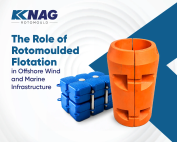
The Role of Rotomoulded Flotation in Offshore Wind and Marine Infrastructure
Offshore renewable energy is ushering in a new phase of growth as countries invest in cleaner power generation and strong coastal infrastructure. Alongside offshore wind farms, marine industries [...]
EPS Solutions for 5G: Building Lightweight and Reliable Telecom Infrastructure
The global rollout of 5G networks is transforming industries by enabling faster connectivity, lower latency and support for emerging technologies such as the Internet of Things (IoT), autonomous [...]
Get in Touch with Us
We look forward to connecting with you!